
A wire service, also called a news agency, is an organization that collects news reports and sells or distributes them to subscribing media outlets. Those customers include newspapers, TV and radio stations and digital publishers. They pay for a steady supply of stories, photos and video that they could not afford to produce on their own.
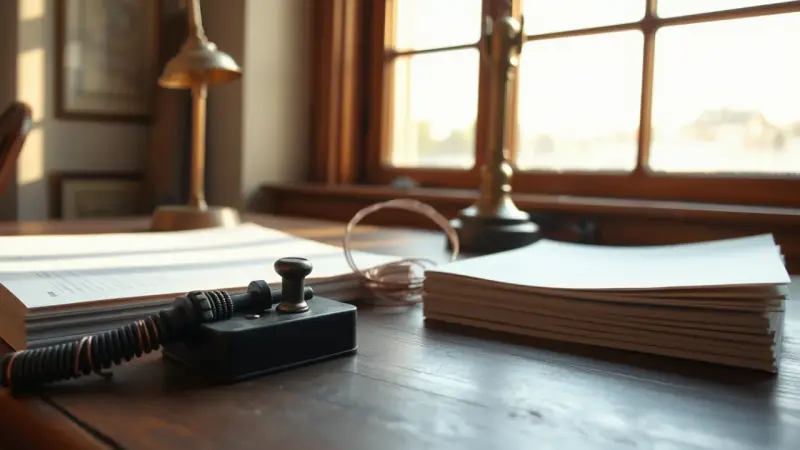
The name comes from the technology. The term dates back to the telegraph era, when news was literally transmitted over telegraph wires. Agencies stopped depending on telegraph lines long ago, but the name stuck.
Where Wire Services Came From
News agencies grew up alongside the telegraph. The French agency Havas, set up in 1835, was an early one, and later agencies traced their history to it. Paul Julius Reuter founded Reuters in London in 1851. At first it carried stock market prices between London and Paris by telegraph, and over time, it expanded into general news reporting.
In the United States, the Associated Press began in 1846, when a group of New York City dailies joined a cooperative venture to provide news of the Mexican-American War. Two years later, six papers pooled their efforts to finance a telegraphic relay of foreign news brought by ships to Boston. By 1856 the cooperative had taken the name New York Associated Press. A Midwestern group broke from the New York Associated Press and was incorporated separately in Illinois as the Associated Press in 1892.
The model spread around the world. India’s national agency, the Press Trust of India, was founded in 1949, shortly after independence, and it is owned by its member newspapers. The agencies also kept pace with new media. For example, UPI launched one of the first wire service audio networks for radio stations in 1958.
How a Wire Service Works Inside a Newsroom
The basic arrangement hasn’t changed much. Agencies write news stories and features that their clients can use with little or no modification, and they send that material out in large volumes. In general terms, a story moves through these steps:
- Reporting. Agency reporters and photographers in bureaus cover events where they happen, from courtrooms and legislatures to disasters and sports events.
- Editing at the agency. Agency editors check and edit the copy before it goes out to every subscriber at once.
- Distribution. The story goes out on the agency’s feed, which today is digital and may include text, photos and video.
- Selection by the client. Editors at a subscribing newspaper, station or website decide which agency stories to use.
- Trimming and localizing. The client may shorten a story to fit, add local details or combine agency material with its own reporting.
The writing style is built for that fourth and fifth step. Breaking news on the wire is usually written in the inverted pyramid style so editors can cut from the bottom. The most important facts come first, so a client can drop the final paragraphs without losing the core of the story.
Why Wire Services Matter to Readers
Wire services shape much of what readers see, even when they never visit an agency’s own website. A small local paper can’t send a reporter to every foreign capital or national event. A subscription lets it give readers that coverage anyway, alongside its own local reporting.
This also explains why the same story can appear nearly word for word on many different sites. When several outlets run identical copy, they are usually all drawing on the same agency feed rather than copying from each other.
To spot wire copy, check the byline and credit line. Wire stories usually name the agency there, sometimes in place of a reporter’s name or next to it. Many also open with a dateline giving the city the report came from, a habit that goes back to the telegraph era. When an outlet mixes its own reporting with agency material, it often notes that the agency contributed to the story.
Knowing the source tells you who did the original reporting. That matters when you want to read the fullest version of a story or understand why coverage of an event looks so similar from one outlet to the next.
Related Terms
- News agency: The more formal name for a wire service. The two are used interchangeably.
- Newswire: Another name for an agency’s feed of stories, and sometimes for the agency itself.
- Bureau: An agency’s office in a particular city or country, staffed by its reporters and photographers.
- Inverted pyramid: The story structure that puts the key facts first, which lets client editors cut wire copy from the bottom.
- Dateline: The place name at the start of a story that shows where the reporting was done.
FAQ
– Is a wire service the same as a news agency?
Yes. A news agency is also called a wire service. The “wire” part of the name comes from the telegraph lines that agencies first used to send news.
– Why do some wire services belong to newspapers?
Some agencies started as cooperatives, where publishers shared the cost of gathering news they all needed. The Associated Press began that way in 1846, and the Press Trust of India still works on that model.
– Can outlets change wire stories before publishing them?
Yes, within the terms of their subscription. Agency copy is meant to be usable with little or no change, but client editors often shorten it, and the inverted pyramid structure makes that easy.
Sources
- The Evolution and Impact of News Agencies on Global Journalism • Journalism University — journalism.university
- Exploring the Evolution and Role of News Agencies • Journalism University — journalism.university
- Associated Press | Britannica — britannica.com